
Stop Building on
Borrowed Infrastructure.
We eliminate dependencies across infrastructure, architecture, development, and AI. Your complete, tailored back-end runtime, delivered from day one. Full control, faster innovation, built to evolve.
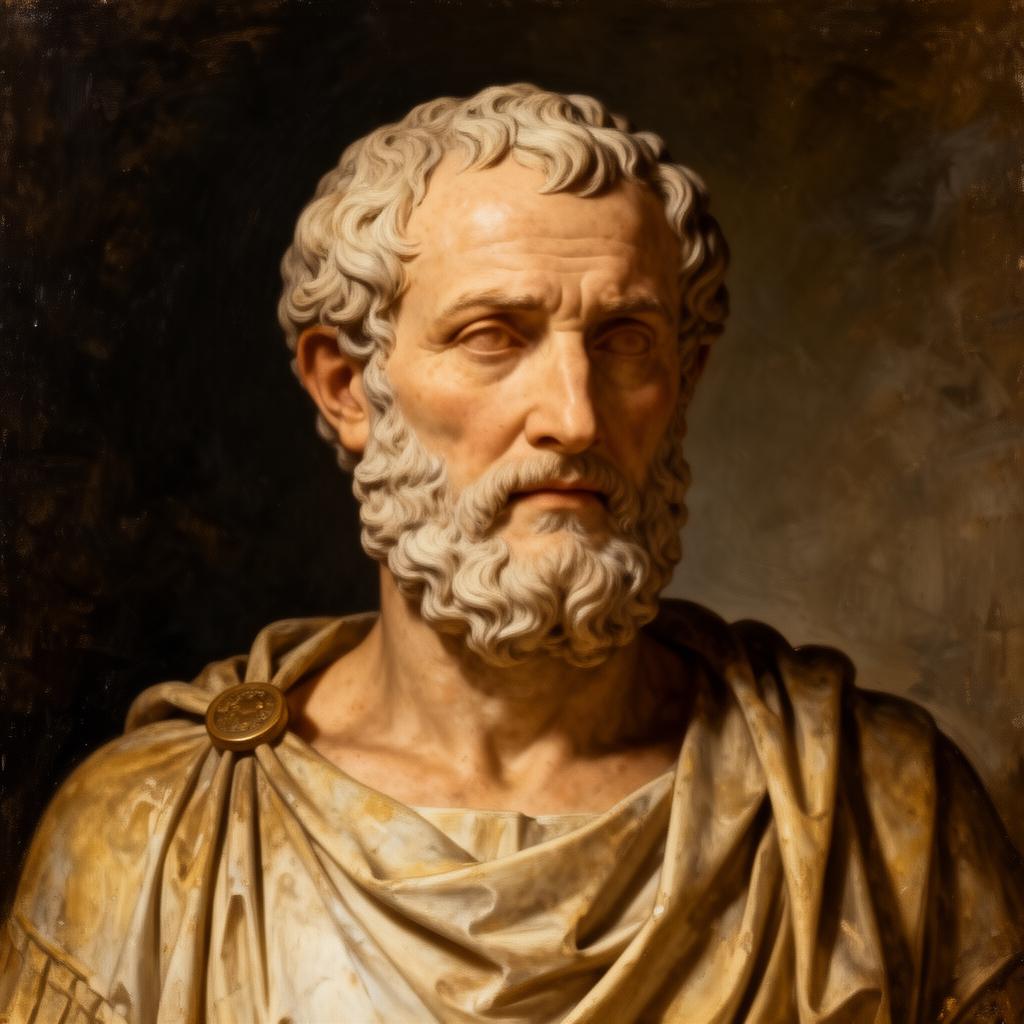
"We are what we repeatedly do. Excellence, then, is not an act, but a habit."
On Competence

The real problem
Dependencies are not just a technical detail. They are the fundamental blockers of speed, control, and innovation across your entire system.
Your system should depend on you.
Not the other way around.
Infrastructure Dependency
AWS/Azure lock-in, pricing uncertainty, limited control.
Run anywhere. Own everything.
Architectural Dependency
Monoliths, tight coupling, fragile systems that resist change.
Decouple your system at its core.
Development Dependency
Reliance on specific developers, knowledge silos, slow iteration.
Build systems that outlive their creators.
AI Dependency
Locked into external AI APIs, no control over data or models.
Stay in control of your intelligence.
Operational Dependency
DevOps complexity, too many tools, too little clarity.
Operate with clarity, not complexity.
The next trillion-dollar AI question is who runs it, not who trained it.
Anthropic and Blackstone answered that question by funding Ode, a 1.5 billion dollar joint venture that sends forward-deployed engineers into enterprises to hand-wire AI, one company at a time. The bet is that implementation is the trillion-dollar category, not the model itself. We agree with the diagnosis. We disagree with the cure.
You do not need an army of grown-up generalists rewriting your business by hand. You need a runtime that already knows how, and skilled assistants that operate it for you.
The Consulting Bet
Buy engineers by the hour.
- Forward-deployed engineers, billed by the hour
- Elite generalists, in short supply
- Custom code per customer, custom to maintain
- Model-first, wired into vendor APIs
- Value trapped inside a consulting engagement
The Runtime Bet
Buy a runtime, operated by skills.
- Trust Runtime, deployed on day one, on your infrastructure
- Skilled runtime assistants operating through the Trusted 9 CLI
- Recipes, not bespoke codebases: readable, versioned, portable
- Runtime-first, model-agnostic, no vendor lock-in
- Value compounds inside your organisation, not a services firm
The playbook decides which skills your runtime needs.
The Runtime Playbook is not a fixed skill menu. It is a runtime system that inspects your context, composes the skills your implementation actually requires, deploys the configuration, provisions the servers, runs the tests, and reports back on what is still missing. If something is unclear, it opens the discussion instead of assuming. The skills you end up with are the ones your business-logic runtime needs, not the ones a template suggests.
Assess
The playbook reads your intent, your Fabric, and your infrastructure, then decides which skills your implementation actually needs.
Compose
It assembles skills on the fly: design, develop, deploy, test, operate, integrate, and any specialised skill the context demands.
Provision
The runtime deploys configuration, spins up servers, wires adapters, and prepares the environment as a runtime action.
Verify
Recipes are replayed, projections asserted, policies validated. The playbook checks what is missing before it hands control back.
Discuss
If a skill is missing, a decision is unclear, or a trade-off needs a human, the playbook opens the conversation instead of guessing.
Evolve
New skills are added, existing skills refined, and the playbook learns which combinations belong to your runtime, not a template.
The Investment Question
Why raise billions to hand-wire AI, if a runtime can run it?
Ode needs 1.5 billion dollars to scale a boutique of elite generalists, because every customer becomes a bespoke project. That is the cost of an implementation model built on people, not on a runtime.
Trusted 9 delivers the same outcome, an AI strategy in production, through a declarative runtime and skilled assistants that operate it. You get design, development, deployment, testing, backup, and restore as runtime actions, not as billable hours. That is what dependency-free implementation looks like.
A complete back-end runtime.
Tailored to your demand.
We remove dependencies across infrastructure, architecture, development, AI, and operations. For every partner we tailor a complete back-end runtime, deployed from day one. Your scalable potential, without the investment it normally requires.

The Analogy
Like buying a computer instead of assembling one. The lowest overhead you cannot find or buy today.
We Build It. You Own It. It Runs.
Every collaboration starts with your specific challenge. We deliver a dependency-free runtime that fits your exact demand, in a very short time. No lock-in, no borrowed infrastructure, no invisible costs.
Your Challenge
Technical debt, new venture, scaling ambition. We understand the landscape before we build.
Tailored Runtime
A complete back-end architecture with minimal dependencies. No bloated frameworks, no vendor lock-in.
You Focus Forward
Your customers, your market, your growth. We handle the infrastructure, deployment, and scaling.
A parallel path, quietly built.
Then AI arrived, and it fit.
While the industry handed itself to cloud providers and then to AI vendors, we kept dependencies out by design. We did not foresee the perfect match with AI. We built for it anyway.
An Entrepreneur and a Researcher, One Question
Bob Nieme, an entrepreneur with a vision for privacy by design in data processing and compliance in data sharing, meets David Smits, researcher in the TU Eindhoven Database Group, inside the CAPA program, Context Awareness in Predictive Analytics. Bob brings web analytics at industrial scale from Adversitement. David brings the academic discipline of separating content from adaptation. The question they refuse to let go of: why do real systems keep collapsing under their own dependencies?
GALE: A Declarative Engine, on Paper
David defends GALE, the Generic Adaptation Language and Engine, delivered as TU Eindhoven's first adaptive PhD thesis. A declarative runtime that separates intent from execution. The academic proof that the pattern works. The commercial proof would take another decade.
The Cloud Era Begins
Hyperscalers take the wheel. AWS, Azure, and Google Cloud rewrite the economics of software around their pricing models. Every service is hyper specific, every integration deepens the lock-in, and efficiency quietly erodes under proprietary abstractions.
Specialization and Sprawl
Hundreds of managed services promise speed, but the bill of materials grows faster than the product. Teams spend more time plumbing infrastructure than shipping outcomes. Cloud bills become a strategic concern, not a line item.
AI Joins the Pipes
AI arrives and gets bolted onto the same fragile stacks. We keep plumbing systems with, and through, AI APIs. Intelligence is rented, data leaves the domain, and dependency simply moves up the stack from infrastructure to intelligence.
Billions of Records, Hotswappable, Backwards Compatible
While the industry added layers, Bob and David kept a promise to themselves. Privacy by design in high volume data processing, billions of records processed daily, runtimes that stay hotswappable and backwards compatible across years of change. One failed start-up taught the hard lessons. Four new companies proved the pattern. Hundreds of projects turned principle into practice. Every architectural decision pushed dependencies out, not in.
Building Applications at Runtime
Fifteen years of research, engineering, and refusal mature into a complete declarative runtime for files, recipes, and events at any volume of scale. Today we build applications at runtime: business operations expressed as intent, composed and deployed by Trust Runtime, free of hyperscaler lock-in, free of AI vendor capture, free to evolve. Trust is not a slogan here. It is what you build when you commit to the same principles for a decade and a half.
We did not build this for AI.
AI made it inevitable.
Declarative intent. Separation of content and adaptation. Deterministic runtimes with policy at the edge. Fifteen years of discipline built the exact substrate that AI assistants need to reason, act, and be trusted. We could not have foreseen it. The principles simply held.
Nine Principles. Centuries of Wisdom.
Every system we build carries the weight of ethical inquiry. Not features. Not promises. Principles.

Trust
"Trust is the glue of life. It is the foundational principle that holds all relationships."
Stephen Covey 1932 – 2012

Benevolence
"The best way to find yourself is to lose yourself in the service of others."
Mahatma Gandhi 1869 – 1948

Openness
"The measure of intelligence is the ability to change."
Albert Einstein 1879 – 1955

Fairness
"Injustice anywhere is a threat to justice everywhere."
Martin Luther King Jr. 1929 – 1968